

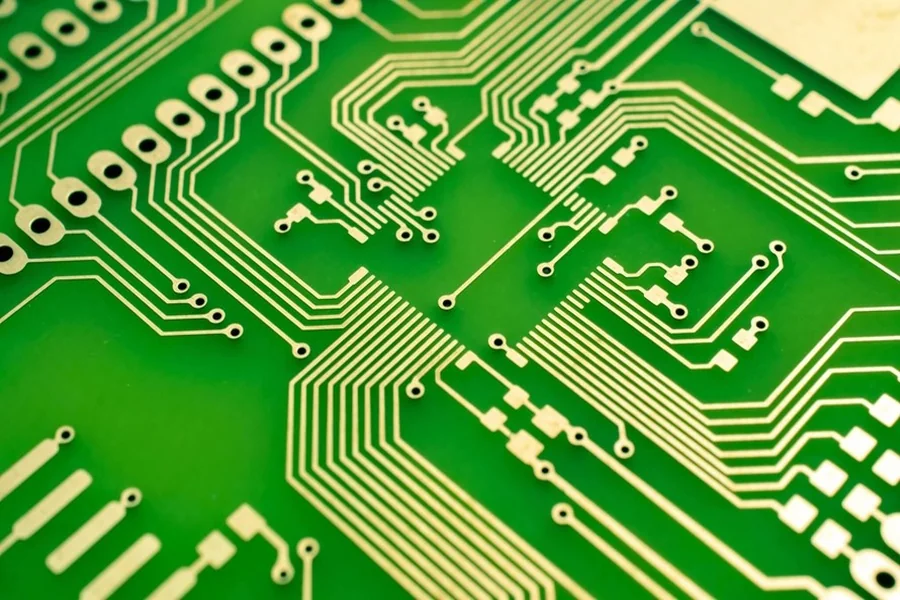
A halogen free printed circuit board is a PCB manufactured without the use of halogen-based flame retardants, such as bromine or chlorine, in its base materials. Traditional PCB laminates often use halogen-containing compounds to achieve flame resistance, but these substances can release toxic and corrosive gases when burned, posing health risks and environmental hazards. By eliminating these halogens, halogen free PCBs offer a safer, more environmentally responsible alternative without compromising on performance.
The term “halogen free” typically means that the laminate contains less than 900 ppm (parts per million) of bromine or chlorine, and a combined total of less than 1,500 ppm of both elements. This classification is in accordance with standards like IEC 61249-2-21, which ensure that the product is genuinely compliant and suitable for eco-conscious applications.
Why Industries Are Switching to Halogen Free PCB Materials
The demand for halogen free printed circuit boards has grown rapidly in recent years due to stricter environmental regulations and increased consumer awareness about electronics recycling. In many regions, laws such as the European Union’s Restriction of Hazardous Substances (RoHS) directive limit or prohibit the use of certain harmful substances, including halogens, in electronic products.
Manufacturers in sectors such as telecommunications, consumer electronics, automotive, and medical devices are making the switch to halogen free materials not just for compliance, but also to meet customer expectations for greener products. Furthermore, companies that adopt halogen free solutions can enhance their corporate sustainability image, which is increasingly important in competitive markets.
Material Composition and Performance Features
Halogen free PCBs use alternative flame-retardant materials, often based on phosphorus or nitrogen compounds, instead of halogenated agents. These materials are carefully engineered to achieve high flame resistance while maintaining essential electrical and mechanical properties.
Performance-wise, halogen free printed circuit boards often exhibit lower moisture absorption compared to standard FR4 materials, which helps improve insulation resistance and dimensional stability. They also tend to have better thermal performance, making them suitable for lead-free soldering processes that require higher reflow temperatures. This makes halogen free PCBs not only safer but also highly compatible with modern electronics manufacturing requirements.
Benefits of Using Halogen Free Printed Circuit Boards
One of the primary benefits of halogen free PCBs is reduced toxic gas emission during combustion. In the event of an electrical fault, overheating, or fire, halogen-containing materials can produce dense smoke and release corrosive gases such as hydrogen bromide or hydrogen chloride. These gases are harmful to humans, corrosive to metals, and can cause extensive damage to electronic equipment. Halogen free materials mitigate these risks, improving overall safety.
Another advantage is compliance with global environmental regulations, which makes it easier for products to enter international markets without costly redesigns or certification issues. The reduced environmental impact of halogen free boards also supports more efficient recycling processes, since they do not produce as many hazardous byproducts during disposal.
In terms of durability, halogen free laminates offer high mechanical strength and stability across varying environmental conditions. This means they can maintain performance in applications subject to high humidity, frequent temperature fluctuations, or mechanical stress.
Applications Across Industries
Halogen free printed circuit boards are used in a wide range of applications where safety, environmental compliance, and reliability are priorities. In consumer electronics, they are found in smartphones, tablets, and home appliances, reducing fire-related hazards in densely populated areas. In telecommunications, they are deployed in network servers, routers, and base stations, where long-term reliability and compliance with safety standards are crucial.
Automotive manufacturers increasingly use halogen free PCBs in advanced driver-assistance systems (ADAS), infotainment units, and control modules to meet strict safety and environmental regulations. The medical sector also benefits, as halogen free materials are ideal for diagnostic equipment, monitoring devices, and surgical tools where patient safety is paramount.
Manufacturing Considerations for Halogen Free PCBs
Producing a halogen free printed circuit board requires careful material selection and process control to ensure that the absence of halogens does not compromise other performance factors. Manufacturers must verify the halogen content through precise testing and certification, ensuring compliance with international standards.
Thermal management is another important consideration. Since halogen free boards are often used in high-temperature lead-free assembly processes, the materials must withstand multiple thermal cycles without delamination or loss of mechanical integrity. The surface finishes, solder masks, and copper plating processes are also optimized to match the unique characteristics of halogen free substrates.
Designers working with halogen free PCBs must also consider differences in dielectric constant (Dk) and dissipation factor (Df) compared to standard FR4 materials. These properties can affect signal transmission in high-speed or high-frequency circuits, so selecting the right laminate and optimizing the stack-up is essential for achieving the desired performance.
Choosing the Right Partner for Your Halogen Free PCB Needs
The transition to halogen free materials requires expertise, precision, and compliance with strict quality standards. Working with an experienced halogen free PCB manufacturer ensures that your boards meet both regulatory requirements and performance expectations. A skilled manufacturer can guide you through material selection, thermal management strategies, and design optimization, ensuring your project achieves the highest levels of safety, reliability, and environmental responsibility.
